Design an AI workflow another operator can run.
A two-hour paid session with Ruslan and Andrei. Audit your workflow and account, answer pre-submitted and live questions, and work through the first useful task, review and operator handoff. Includes a private recording, transcript and summary after the call.
See the work
behind the discussion.
A published reference for the work we can discuss. Your session uses the account, evidence and questions you bring.
Make the responsibilities visible.
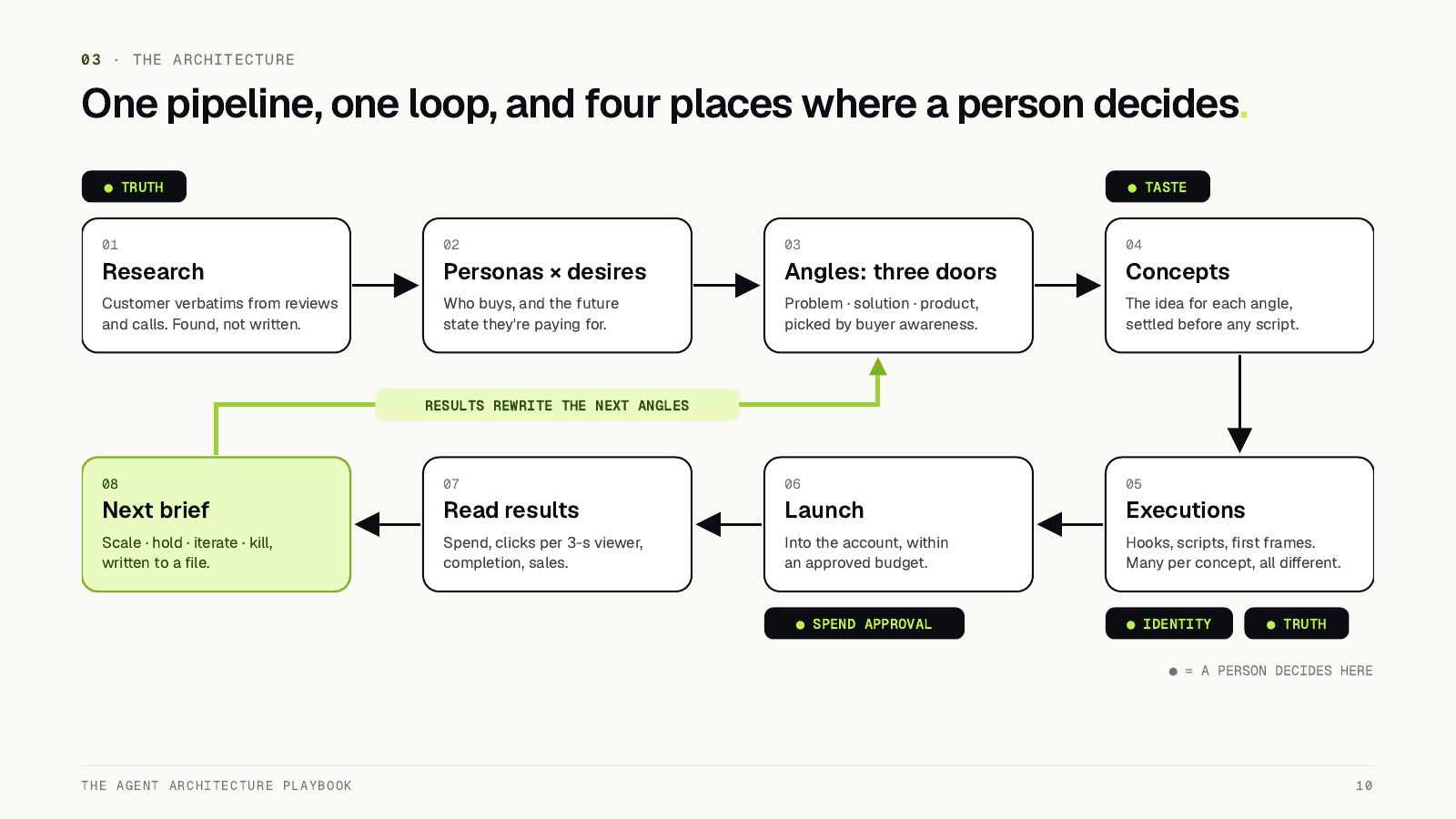
The existing playbook separates the working pipeline from the loop and the points where a person decides. A useful session applies that thinking to one process your team already runs.
- What does the task receive, and what must it return?
- Who reviews the output and handles missing inputs?
- Can the next operator repeat the task?
Bring a real SOP and examples. Work toward a map or first-task specification your implementation owner can use.
Bring your questions.
Work through the answers.
Send your questions before the call and bring more live. The account audit and answers happen within the session; the work follows the priorities you bring.
| What we can work on | Possible working output |
|---|---|
Workflow/account audit and your questions | An audit of the workflow/account and answers to your pre-submitted and live questions within the session. |
Inputs and output contract | A concrete description of the information the workflow needs and what a usable result looks like. |
First specialist or system workflow | A first-task specification matched to your existing tools and implementation owner. |
Review and cost decisions | The checks that matter before the team spends money, publishes work or changes an account. |
A second-operator handoff | A practical walkthrough for someone other than the original builder to repeat the task. |
Update adoption and implementation | A scoped next-step plan for adopting supported changes in your own workspace. |
Source: Agentic AI session scope
The audit and questions are covered in the live session. Full production, implementation and ongoing operation are separate services.
See how the work
fits together.
Map the work before automating it. Make inputs, responsibilities and review decisions visible to the next operator.
Agentic AI: from inputs to a decision
Follow the relationships, then select a stage to see what goes in and what your team can use next.
A real SOP, permitted examples and existing tools
A bounded task and input contract
Select a stage to inspect its input and output. This diagram explains the workflow.
Source: Agentic AI working-session guide · Illustrative process; adapted to your agreed question
How to read the evidence you bring
| Signal & definition | Comparable evidence | Decision it supports |
|---|---|---|
Usable output rateOutputs passing agreed review ÷ reviewed outputs | Keep the task, input difficulty and acceptance criteria consistent. | Find which step needs a better instruction, input or review check. |
Time to usable outputElapsed time from task start to accepted work | Include human review and rework; compare the same task scope. | Identify the handoff that constrains the workflow. |
Cost per accepted taskIncluded tool and labor costs ÷ accepted tasks | Name the included costs, currency and observation period. | Review whether the first workflow is worth adopting. |
Second-operator repeatabilityCan another operator run and review the task? | Use representative inputs and the documented handoff. | Choose the next training, configuration or implementation action. |
Source: Session decision guide · No connected account data or forecast
Prepare the inputs.
Keep the useful work.
Bring the evidence and the person who will act on the work. After the call, receive the private recording, transcript and summary, along with the working artifacts produced.
What stays with your team
| Work product | How your team uses it |
|---|---|
Private video recording | Replay the account audit and the answers to your pre-submitted and live questions. |
Transcript | Find the details of the discussion and share them privately with your team. |
Session summary | Review the main findings, answers and next actions after the call. |
Selected artifact | A workflow/role map, first-task specification and review/implementation plan selected for your actual process. |
Next actions | The next useful task, implementation owner and approvals needed. |
The recording, transcript and summary are included after the call. Confirm any additional follow-up channel and scope with your host before booking.
Book the working session.
This is a paid consultation. Review the real calendar’s availability, payment and confirmation steps before booking. A selected slot does not establish completed payment.
Ruslan & Andrei · Both Tegra founders
The session price includes applicable tax. Review payment and booking terms in Cal.com when you choose your time. If Tegra cannot deliver the scheduled session, we will contact you to reschedule. Read the consultation terms.
Loading available times. Open the calendar in a new tab · Ask for help
Choose the next
responsibility.
The session is independently useful. Further implementation, a system purchase and a managed engagement are optional separate decisions.